-
🏛️ Villa Hügel: Hoch über dem Baldeneysee thront die einstige Residenz der Familie Krupp – Symbol für die industrielle Macht vergangener Zeiten.
-
🌉 Ruhrbrücke Kettwig: Eine fotogene Brücke mit Ausblick auf Fachwerk und Fluss.
-
🌲 Ratinger Stadtwald: Ein grünes Band mit alten Alleen, durch das der Weg ruhig und kühl verläuft.
-
🧭 Neanderlandsteig: Ein Fernwanderweg, der kurz die Bahntrasse kreuzt – und Captain Faulmann zum kurzen Grübeln über Wanderstiefel verleitete.
-
🏭 Chempark Leverkusen: Nicht schön, aber imposant – ein monumentales Mahnmal industrieller Wucht.
-
🕊️ Himmelgeister Rheinbogen: Wer südlich ausweicht, findet hier Auenlandschaft und weite Blicke. Tatze hoch.
- The left, in its rhetorical looseness, hollowed out the authority of precision.
- The right, seizing that vacuum, has declared war on rigor altogether. And happens to find old weapons newly sharpened by decades of unrigorous academic rhetorical theatre.
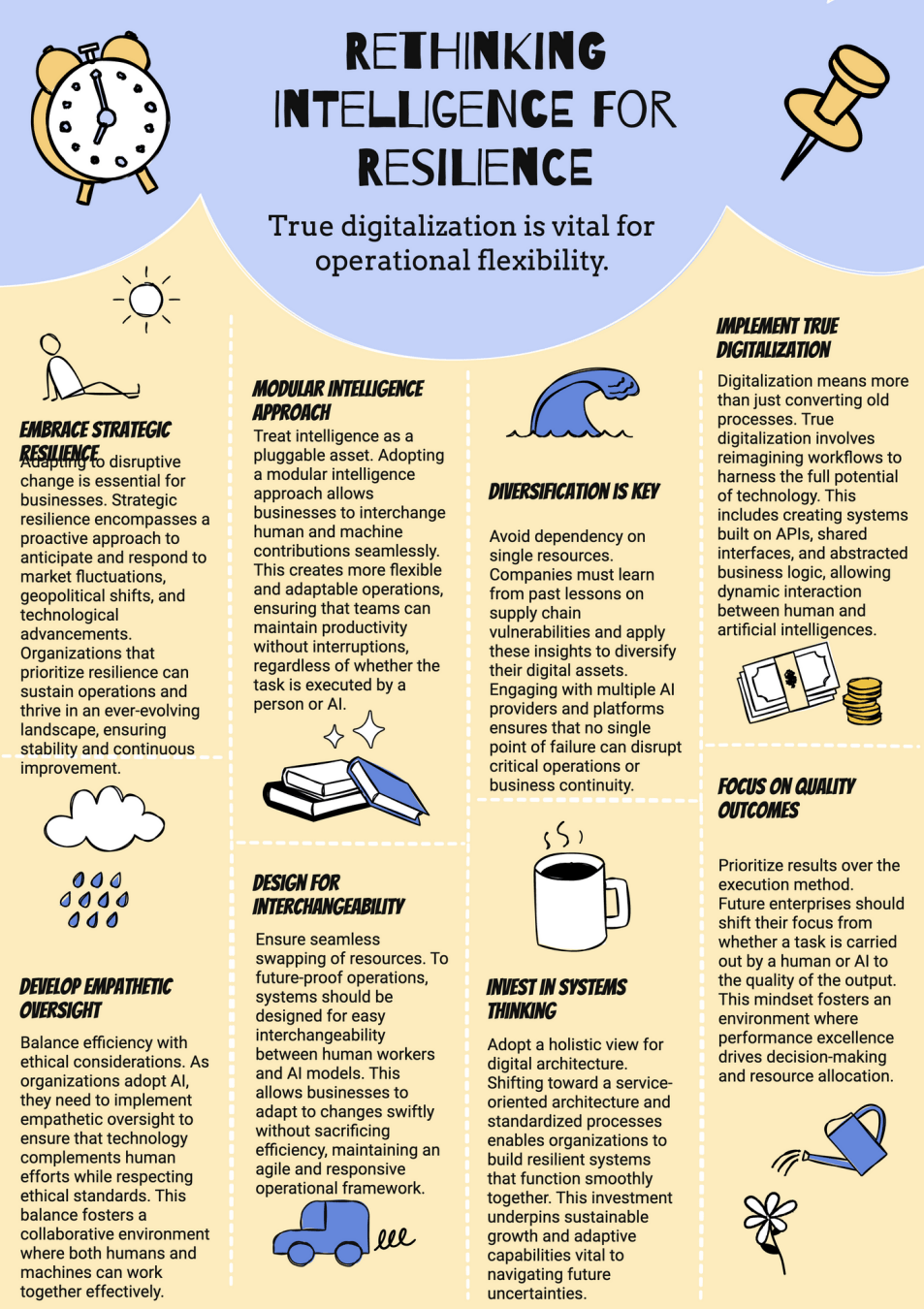
- Swap a human for an AI (and vice versa) without disruption.
- Replace one AI model with another (e.g., GPT with Claude or Gemini) seamlessly.
- Treat intelligence—whether human or machine—as a pluggable resource.
- Systems are built on APIs, not documents.
- Intelligence (human or AI) connects through clear, standardized interfaces.
- Business logic is abstracted from execution—any qualified agent can perform the task.
- API pricing and licensing shifts
- Regulatory restrictions
- Performance or ethical failures
- Modular, service-oriented architecture
- Abstracted processes with standardized inputs/outputs
- Governed, portable intelligence assets (human or machine)
- True digital maturity—not just tools, but systems thinking
Captain Faulmann Radelt Von Essen Nach Rath Verspatung Dampf and Ganselieseln
Captain Faulmann radelt von Essen nach Rath – Verspätung, Dampf & Gänselieseln
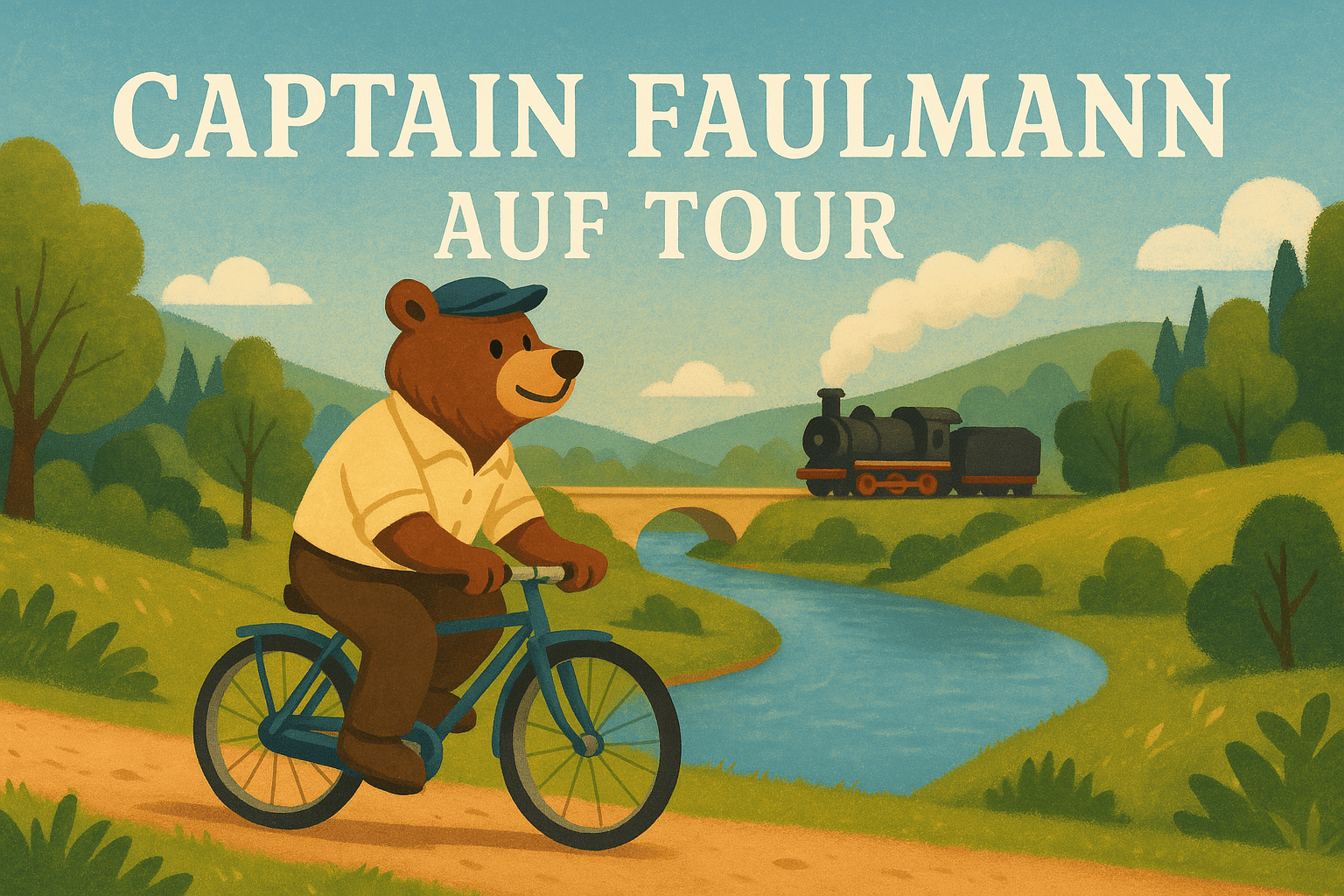
Captain Faulmann, der Freund gepflegter Umwege und entschleunigter Fortbewegung, hatte sich Folgendes vorgenommen: Eine Radtour von Essen nach Rath, mit Aussicht, Kultur und einem Schuss Ruhrpott-Romantik. Doch der Tag begann, wie es sich für ein echtes Abenteuer gehört – mit einem gepflegten Bahnchaos.
Prolog: Warteschleife mit Dampf
Früh morgens am 12 April stehe ich am Flughafen Köln/Bonn, Gleis 2 – bereit, den RE6 zu besteigen. Doch der bleibt schlicht und ergreifend aus. Ersetzt durch… gar nichts. Erst mal einen Kaffee holen – eine Stunde vergeht. Die Luft ist frisch, die Laune trotzdem gut. Dann ein Lichtblick: In Köln-Deutz und später auch am Kölner Hauptbahnhof entdecke ich seltsame Grüppchen – ausgestattet mit Stativen, dicken Kameras und Thermoskannen. Dampflok-Fotografen! Eine Spezies, die selten geworden ist, aber stets mit Würde auftritt. Offenbar steht eine nostalgische Sonderfahrt an. Ich lächle – leider fährt mein RE6 ab, bevor sich ein Nostalgieszug zeigt. Immerhin sehe ich noch den roten Schienenbus von rund um Köln, ein weiteres Projekt echter Bahnromantiker, Tatze hoch für die Enthusiasten von Cpt. Faulmann.
<div class="h_iframe">
    <iframe height="2" width="2" src="https://www.komoot.com/de-de/tour/1672528933/embed?share_token=aENQkbf3jmp998UXQWYyjZvSKHTdh4ovEqvLgwQVjg9vab0bPf&profile=1&gallery=1" width="100%" height="700" frameborder="0" scrolling="no"></iframe>
</div>
</div>
Etappe 1: Aufbruch in Essen 🛤️
In Essen angekommen, besteige ich gegen 11:35 Uhr MESZ mein treues Rad. Die GPS-Aufzeichnung beginnt. Es geht hinein ins Grüne, vorbei an rostigen Relikten der Industrie, zwischen Parks und Kanälen, die kaum noch erahnen lassen, dass hier einst Kohle und Koks den Ton angaben.
Etappe 2: Der Baldeneysee – Vom Industrieprojekt zur Idylle 🌊
Der Weg führt mich bald zum Baldeneysee, 1933 als Stausee angelegt, um die Wasserqualität der Ruhr zu verbessern – und, natürlich, zur Energiegewinnung. Heute wirkt er eher wie ein überdimensionierter Biergarten auf Wasser: Segelboote tanzen, Spaziergänger flanieren, und ich gleite am Ufer entlang. Kaum zu glauben, dass hier früher Industrieabwasser floss. Fortschritt kann schön sein, wenn man ihn lässt.
Etappe 3: Kettwig – Ruhrpott trifft Fachwerk 🏘️
Dann Kettwig – ein Ort wie gemalt. Fachwerkhäuser, historische Gassen, das ruhige Plätschern der Ruhr, die einst das Rückgrat der Kohleindustrie war. Heute klar, sauber, fast poetisch. Ich verweile kurz, betrachte mein Spiegelbild im Fluss, sinniere über Vergänglichkeit und gönne mir ein Stück Streuselkuchen.
Etappe 4: Auf alten Gleisen zur Aussicht – die Niederbergbahn ruft 🚴♂️
Hinter Kettwig beginnt einer dieser Abschnitte, bei denen ich nicht nur fahre, sondern auch innerlich schwebe: Ich folge dem Niederbergbahn-Panoramaradweg – einer ehemaligen Eisenbahntrasse, die heute ein Meisterstück der Radinfrastruktur ist. Die Steigung ist sanft, der Belag tadellos, und vor allem: Die Aussichten sind großartig.
Zur Rechten öffnet sich der Blick auf die weit geschwungene Ruhrstraße und die Hänge des Ruhrtals, über die sich Sonnenlicht wie Sahne auf warmen Streuselkuchen legt. Weiter oben, zwischen Weiden und Apfelbäumen, reihen sich Pferdehöfe aneinander. Haflinger, Warmblüter und Ponys dösen entspannt am Zaun, während Reiterinnen in Helm und Hoodie an mir vorbeitraben. Hier duftet es nach Gras, Heu und friedlichem Leben. Für einen Moment möchte ich vom Rad absteigen, ein Pferd satteln und einfach im Trab davonreiten – aber dann erinnere ich mich das ich gar nicht weis, wie das geht.
Etappe 5: Die Bergische Kaserne – Wasser, Wald und Erinnerungen 🏞️
Nach der Höhenfahrt durch Felder und Wälder erreiche ich die ehemalige Bergische Kaserne, am östlichen Rand Düsseldorfs. Ursprünglich in den 1930er-Jahren errichtet, diente sie lange der Bundeswehr – zuletzt dem Zentrum für Verifikationsaufgaben, das internationale Abrüstungsverträge überwachte. Heute sind viele Gebäude leer oder im Umbau – die Zukunft zieht ein, Stück für Stück.
Etappe 6: Monheim, Leverkusen – Gänseliesel und Fußballchöre 🦆⚽
Zunächst erreiche ich Monheim, hinein in den Rheinbogen, wo ein liebenswerter Gruß wartet: die berühmten Gänseliesel-Ampeln. Statt des üblichen Ampelmännchens wacht hier eine Gänsehirtin über den Straßenverkehr – ein sympathisches Symbol für regionale Identität und ein echter Hingucker. Ich halte bei Rot. Natürlich.
Dann führt mich die Route weiter durch Leverkusen, wo ich am Stadion von Bayer 04 vorbeikomme. Schon von Weitem höre ich Fangesänge, Rufe, Trommeln – irgendwo da drinnen läuft ein Spiel, und das Stadion pulsiert. Von außen sieht man zwar nichts, doch die Geräuschkulisse reicht vollkommen aus, um die Emotionen zu transportieren. Ich spüre den Rhythmus unter den Reifen, als ich am Zaun entlangrolle, und grinse.
Was Captain Faulmann sonst noch auffiel 🧭
Auch abseits der Etappenpunkte gab es viel zu entdecken:
Ziel: Rath 🏁
Nach 86,15 Kilometern, 565 Höhenmetern bergauf, 606 Höhenmetern bergab und gut 5 Stunden 20 Minuten Fahrzeit erreiche ich Rath – angenehm erschöpft, seelisch erfrischt. Was bleibt, ist das gute Gefühl, mit eigener Kraft, offenen Augen und einer Portion Geduld eine ganze Region durchquert zu haben – von der Dampflokromantik in Köln bis zur Gänseliesel am Rhein.
🧢 Faulmanns Fazit
Dampflokgefühle, Gänseliesel-Charme und Kuchen am Hang – diese Tour hat alles, was mein Herz höher schlagen lässt.
Und morgen? Da bleib ich erstmal liegen.
— Captain Faulmann
In Defense of Precision Dijkstra Wittgenstein and the Void of Stupidity
In Defense of Precision: Dijkstra, Wittgenstein, and the Void of Stupidity
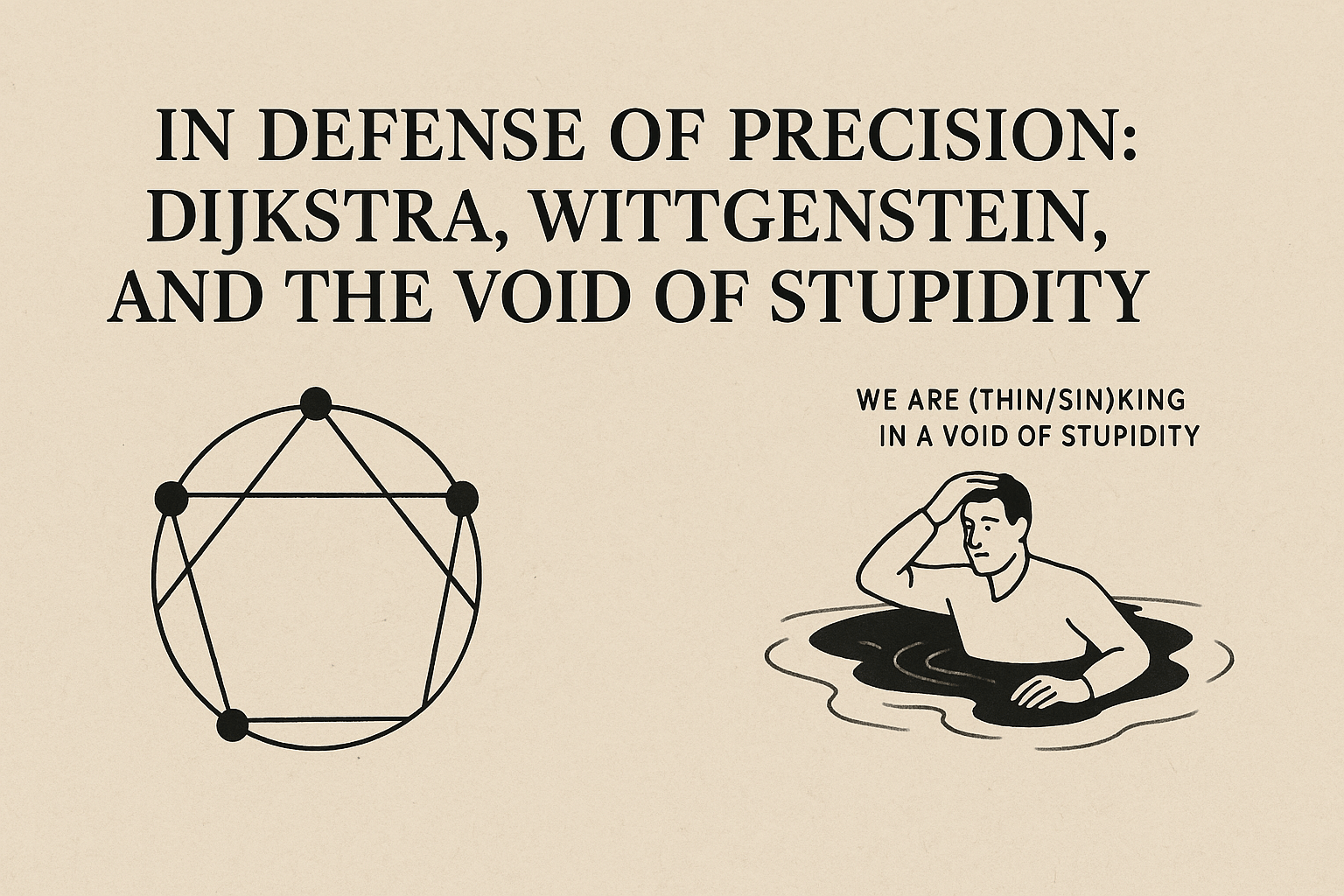
Introduction In 1978, Edsger W. Dijkstra penned a fiery and often overlooked note titled On the foolishness of ‘natural language programming’. At its core, it’s a technical argument: human languages are too ambiguous to reliably instruct machines. But between the lines, it reads like a cultural critique. Dijkstra wasn’t just concerned with programming — he was worried about thought itself.
And if we listen closely, we can hear echoes of another great mind: Ludwig Wittgenstein. From opposite ends of the intellectual spectrum, Dijkstra and Wittgenstein converged on a single, urgent theme: language shapes — and often distorts — how we think.
The Problem with Natural Language Dijkstra believed that programming is not just writing instructions for a computer; it’s writing instructions that must be perfectly unambiguous. Natural languages like English are ill-equipped for this. They’re too loose, too riddled with assumptions. A computer doesn’t “guess” what you mean — it does exactly what you say.
“The purpose of a programming language is to communicate a program and nothing else: it should be designed so as to be easily and mechanically translatable into efficient machine code.”
This demand for precision is not an arbitrary fetish — it’s a survival strategy in the world of software, where ambiguity leads to failure.
Wittgenstein and the Limits of Language Dijkstra’s frustrations parallel the two Wittgensteins: the early and the late. In the Tractatus Logico-Philosophicus, early Wittgenstein insists that language must mirror reality, and only statements with a clear logical form have meaning. This aligns neatly with Dijkstra’s formalist mindset.
But later, in Philosophical Investigations, Wittgenstein turns the tables. Language, he argues, is not a mirror but a set of practices — “language games” we play in context. Meaning is use. And while this insight illuminates the richness of human communication, it also reveals its unreliability. Words mean different things to different people. Grammar is a guideline, not a law. Precision is the exception, not the rule.
Dijkstra saw this fuzziness not as beauty, but as danger.
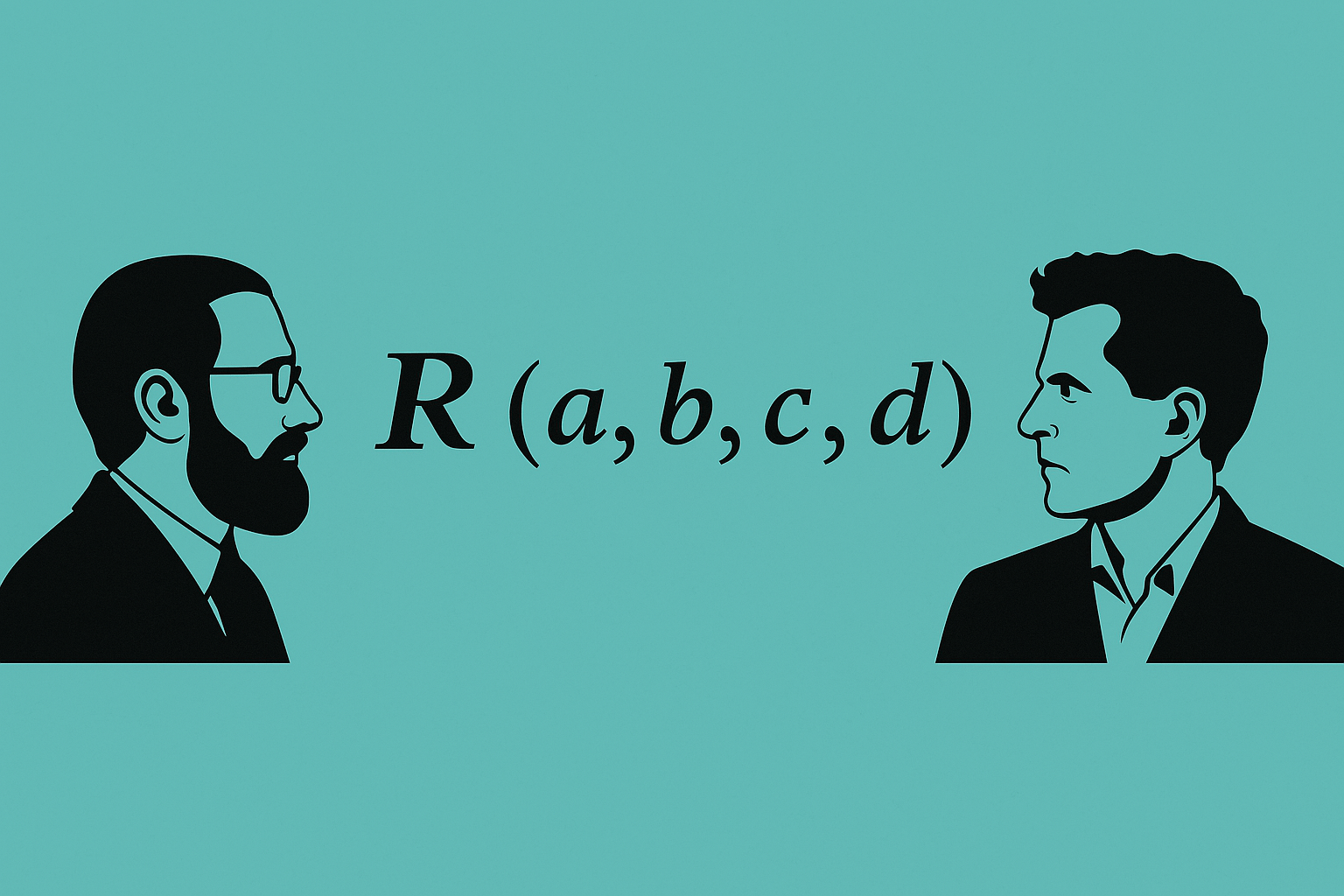
Example where Natural Language Fails: The Missing Predicate Problem A striking example of natural language’s limitation is its clumsy handling of multi-entity relationships. Binary predicates? Fine. Ternary? Awkward but doable. But four-place predicates? Natural language begins to break down.
R(a, b, c, d)Transaction(User1, User2, Amount, Timestamp)
Natural language, in contrast, collapses into ambiguity:
“She transferred money to him last Thursday during the conference.”
Was the timestamp about the transfer or the conference? Who exactly was involved? What counts as the event? The sentence hides more than it reveals.
This is where formal languages show their strength — not as replacements for human expression, but as tools for clarity in complexity.
The Void of Stupidity: From Formalism to Cultural Critique
Dijkstra’s critique of natural language was part of a broader fear: that rigorous analysis is being replaced by rhetorical noise. He feared a society drifting away from logic, drowning in unexamined assumptions and emotional appeals.
Fast-forward to today, and his fears feel prophetic. Public discourse has devolved into linguistic theatre. The tools of analysis are dismissed as elitist or inconvenient. Ironically, the linguistic scepticism once used by the academic left to critique power structures is now used by the populist right to undermine truth altogether.
Much of the liberal-left intellectual tradition more and more prided itself on moral sensitivity and emotional nuance — but often at the expense of analytical precision. In prioritizing feeling over form, affect over clarity, it ironically paved the way for the rise of a reactionary right that did not only hate the content of the elitist left’s ideas but learned to weaponize these same linguistic tools, only to go further: by rejecting or at least ignoring not just emotionless logic, but the very idea of objectivity, of science, of truth itself.
This is the double irony of our moment:
And now, at exactly this historical juncture, machines have begun to simulate understanding of natural language. Tools like large language models generate plausible-sounding prose with astounding fluency — but without grounding, without true comprehension, without the rigor that Dijkstra would have demanded. In doing so, they add another layer to the fog: producing yet more words, more surface coherence, more illusions of meaning.
We risk sinking deeper into the swamp — not because machines are stupid, but because they reflect our own abandonment of disciplined thought. The machines speak our language all too well. And that may be the most dangerous thing of all.
We speak about AI as if it thinks. But the real crisis is that we’ve stopped doing so. We outsource not only computation, but cognition. In a world where every question is met with a generated answer, the art of asking precise, rigorous questions — the true essence of thought — may become lost.
Worse still, we may have unlearned the very critical thinking required to detect where these machines go wrong. Having trained them on imprecise, emotionally loaded, and analytically weak data, we risk creating systems that mimic our worst habits — and lack the very structure of thought necessary for meaningful correction. We taught them to speak in a haze, and now we struggle to see through it ourselves.
Dijkstra might say: “You have taken the slippery nature of language as an excuse to abandon rigor — and now, all discourse is quicksand.”
Wittgenstein never intended his language games to justify chaos. But in the wrong hands, his insights have become cover for a dangerous relativism.
Precision as Resistance In a world where ambiguity is a political tactic and meaning is manipulated for effect, the demand for precision becomes a form of resistance. Symbolic languages — math, code, logic — are not merely technical tools. They are disciplines of the mind. They force us to say exactly what we mean, or say nothing at all.
Wittgenstein warned us of language’s limits. Dijkstra showed us the cost of ignoring them.
If we want to think clearly — and build systems, societies, and arguments that endure — we must return to precision. Because in the end, the enemy isn’t just bad code or bad grammar.
It’s bad thinking.
Speculative Future: Echoes in the Fog As we move forward, we must consider the world we are constructing — not just technologically, but epistemologically. If we continue to train machines on the detritus of our imprecise discourse, we may enter an era where machines appear articulate, but no one understands anything. Conversations will be simulations of coherence, not vessels of understanding.
In such a future, what looks like intelligence may be little more than recursion in a hall of mirrors. The danger is not that machines will think like us — but that we will forget how to think differently. That we will come to accept approximation as adequacy, and persuasion as proof.
The fight for rigor, then, is not just academic. It is existential. Precision may well become the only remaining sign of intentional thought — the last light we can trust in a fog of synthetic fluency.
Closing Thought As Wittgenstein said: “Whereof one cannot speak, thereof one must be silent.”
Dijkstra, ever the pragmatist, might have added: “Or better yet, write a compiler.”
But perhaps today we must go further:
The compiler won’t save us. Not if we don’t know how to write the spec.
Rethinking Intelligence Why True Digitalization is the Key to Resilience
Rethinking Intelligence — Why True Digitalization Is the Key to Resilience

“If I can seamlessly replace an Indian colleague with a German or an Egyptian, I should be able to swap one AI model for another just as easily. This is not just operational flexibility—it’s business continuity.”
In today’s turbulent global environment, the need for strategic resilience has never been clearer. From geopolitical shocks to rapid AI evolution, the stability of our business models is being tested on all fronts. To stay ahead, global enterprises must adopt a new mindset—one that treats both human and artificial intelligence as interchangeable and modular. But here’s the hard truth:
We will not succeed in this transformation unless we take digitalization seriously.
And let’s be clear: this is not a cold, dehumanizing exercise. Treating humans as swappable components next to AI is a dangerous, even unethical mindset—unless it is grounded in deep respect for people and supported by digital systems that protect roles, identities, and contributions. The goal is not to devalue human labor, but to build resilient systems that don’t collapse when a single contributor—human or machine—becomes unavailable.
Also, let’s not pretend this is entirely new. We’ve been augmenting human labor with machines for decades—from autopilots in aviation to industrial robotics. AI is simply the next step in that evolution. The difference now is that intelligence—whether cognitive or mechanical—is becoming integrated in more areas of work, including decision-making, language, and creative tasks. This requires a more mature, transparent, and flexible infrastructure.
AI Must Become Core, Not a Curiosity
Artificial Intelligence—particularly Natural Language Models (NLMs)—can no longer be treated as experimental add-ons. These models are becoming integral to everything from customer interaction to internal operations. To treat them as peripheral is to misunderstand their transformative power. AI is no longer optional; it’s foundational.
Diversify or Risk Dependency
Deglobalization trends are making it risky to over-concentrate operations in specific regions, talent pools, or tech providers. Just as we learned to diversify supply chains and labor markets, we now need to diversify our digital and AI assets. No single provider or platform should become a point of failure.
Interchangeability: The New Design Imperative
To future-proof operations, our systems must be designed for interchangeability:
Intelligence must be treated as a modular, portable asset—not hardwired into our workflows.
But again: this is a design and systems challenge—not a value judgment on humans. True digital systems must elevate human roles and make organizations more humane, not more transactional.
And perhaps even more important: just as an Indian can work together with an Egyptian or a German, they can—and must—work together with an AI. These relationships are not just about replacement, but about collaboration. The future is not human versus machine. It’s human and machine, side by side, contributing as colleagues toward shared outcomes.
This is not just about AI. It’s about robotics, automation, and every digital component that augments or executes work. We’ve long accepted that machines can land planes, assemble products, and navigate ships. What’s new is the scale, sophistication, and visibility of these systems in the knowledge economy. That’s why digitalization isn’t optional—it’s existential.
Digitalization Is the Missing Link
Here lies the gap:
Many organizations convince themselves they’ve “gone digital.” But what they’ve really done is digitize analog workflows—not reimagine them.
True digitalization means:
As long as we are not serious about digitalization, we will not achieve intelligence interchangeability or sustainable resilience.
This is not about simplification; it’s about managing complexity through modularity and foresight.
Human and AI Labor: Two Sides of the Same Volatility
Human labor markets are volatile: resignations, relocations, and demographic shifts create constant churn. But the same is now true for AI:
Treating both as interchangeable assets—not static dependencies—is the only way to ensure resilience. But this requires empathy, oversight, and clarity about where ethics end and efficiency begins.
What Must Be Done
To unlock this future, we must invest in:
The Future Is Flexible
The enterprise of the future won’t ask whether a task is done by a person or an AI. It will ask only: “Was it done well?”
We must build toward a reality where intelligence is modular, resilient, and swappable.
But that reality depends on something we’ve only just begun: serious, deep, uncompromising digitalization.
Let’s stop digitizing the past. Let’s start building for intelligent resilience—with systems that empower, not replace, the people behind them.