- Entstanden im frühen 16. Jahrhundert für den Kreuzgang der Abtei Altenberg.
- Ursprünglich ca. 115 Scheiben, erhalten sind heute noch 44.
- Verteilung der erhaltenen Fenster:
- 18 in St. Mary’s Church, Shrewsbury (England)
- 13 im Museum Schnütgen, Köln
- 6 in der Sammlung Ludwig, Aachen
- 2 im Metropolitan Museum of Art, New York
- 3 auf Schloss Stolzenfels
- 2 in der Sakristei des Altenberger Doms
- Die Scheiben zeigen Szenen aus dem Leben des Heiligen Bernhard von Clairvaux.
- Heute gelten sie als eines der bedeutendsten Beispiele spätmittelalterlicher Glasmalerei.
- 16.–21. August 2005
- Motto: „Wir sind gekommen, ihn anzubeten“ (Mt 2,2)
- Vigil (20.8.): ca. 800.000 Pilger
- Abschlussmesse (21.8.): ca. 1,1–1,2 Millionen Menschen
- TV-Reichweite: ~250 Mio. Zuschauer weltweit
- Marienfeld (260 ha, rekultiviertes Braunkohlegebiet im Rhein-Erft-Kreis)
- Papsthügel:
- 10 m hoch, 15.000 m² Grundfläche
- „Berg der 70 Nationen“ – Erde aus 70 Ländern eingebracht
- Platz für 2.000 Mitwirkende (Priester, Chöre, Helfer)
- Erste Auslandsreise von Papst Benedikt XVI.
- Weihe der Weltjugendtagsglocke (6,7 t Bronze, benannt nach Johannes Paul II.)
- Historischer Besuch in der Synagoge Köln (erstmals ein Papst in einer deutschen Synagoge)
- Strombedarf: ca. 15.000 kW
- Wasserversorgung: bis zu 800.000 Liter/Stunde
- Tausende Helfer, Sanitäter, Freiwillige im Einsatz
Wo Glas Geschichten erzählt
Captain Faulmann im Museum Schnütgen zwischen Wunderlegenden und Gegenwart
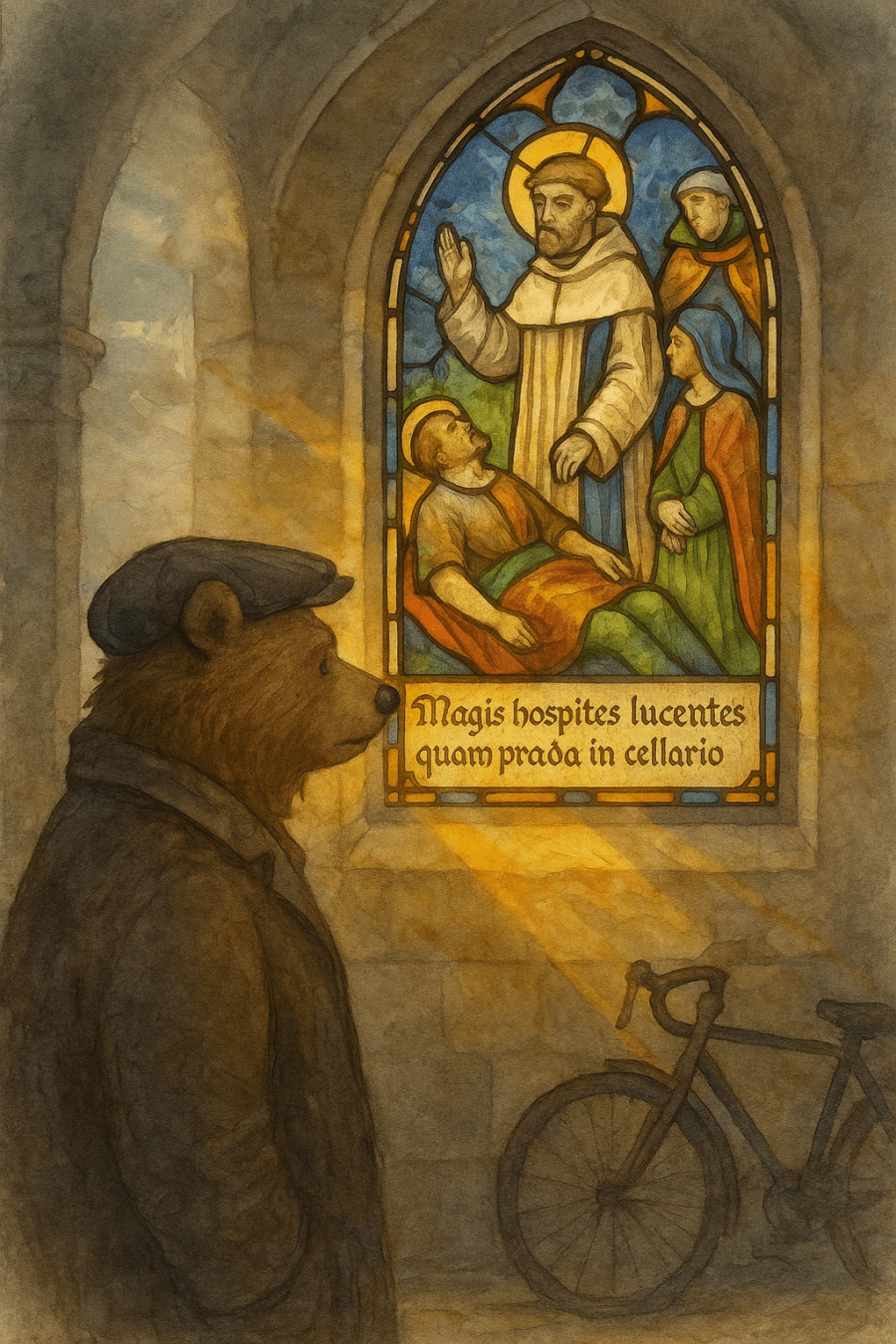
Samstagnachmittag über Köln: Das Wetter war launisch, mal ein paar Tropfen, mal ein Schauer – doch immer wieder brach auch die Sonne hervor und legte goldene Streifen auf die Straßen. Für Faulmann war klar: kein langer Weg auf zwei Rädern, sondern ein Abstecher dorthin, wo Wärme und Geschichten warten – ins Museum Schnütgen.
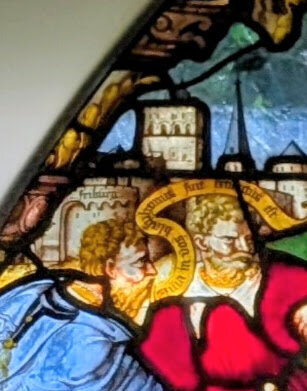
Zwischen Madonnen, Heiligenfiguren und Reliquiaren blieb er plötzlich stehen. Ein Glasfenster, das in den Sonnenmomenten dieses wechselhaften Tages wie eine Flamme leuchtete, zog ihn in seinen Bann. Es zeigte den Heiligen Bernhard von Clairvaux, der einen Lästerer wiedererweckte – und eine Inschrift behauptete, dieses Wunder sei in Freiburg geschehen.
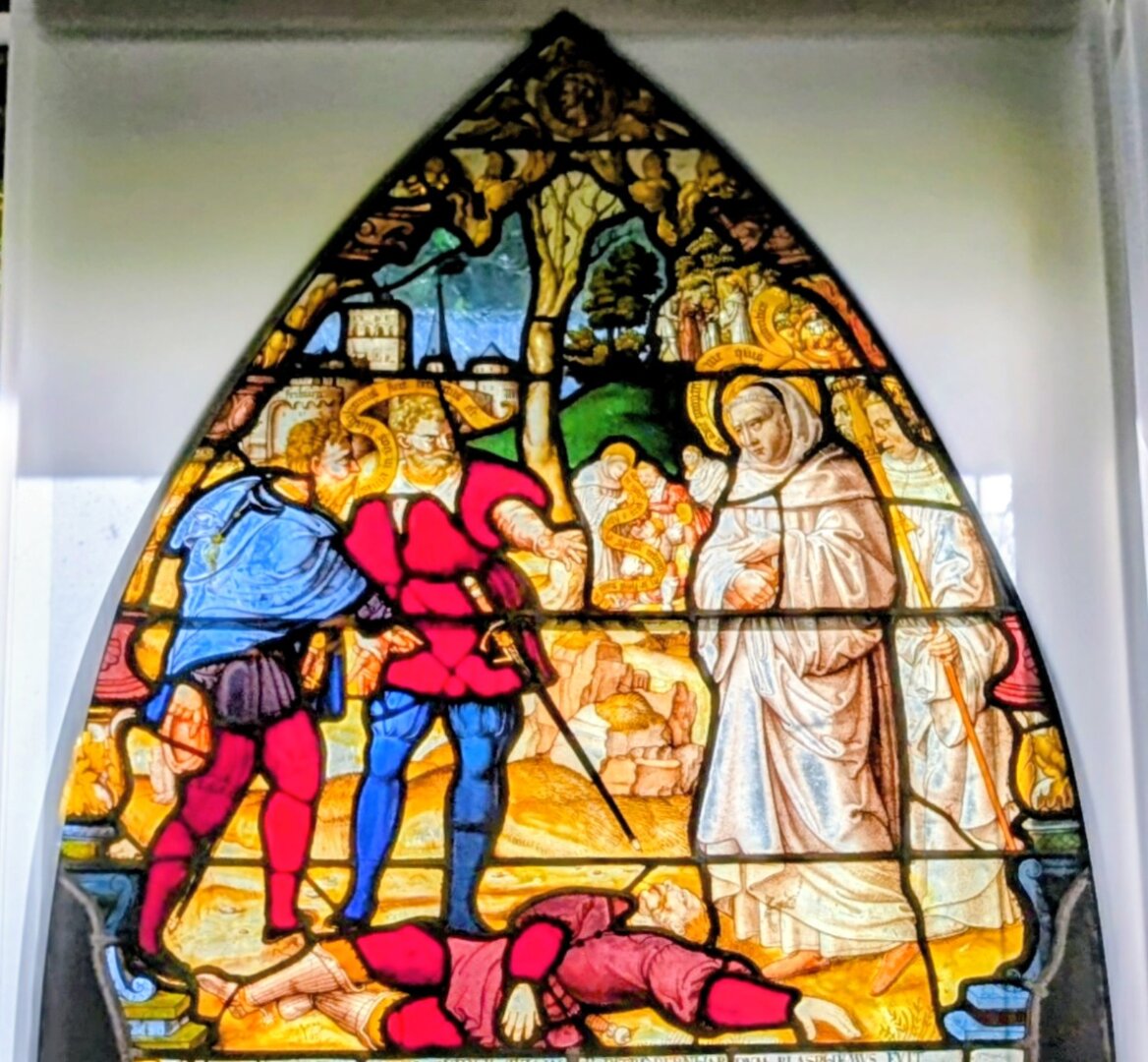
Faulmann runzelte die Stirn. Er kennt Freiburgs Geschichte von früher her ziemlich gut – und wenn es eine bekannte Wunderlegende mit Bernhard von Clairvaux in Freiburg gäbe, wäre ihm die sicher bekannt. Glücklicherweise war er gerade in einem Museum: statt auf dem Handy herumzuwischen, konnte er gleich die Kataloge und Infotafeln durchstöbern – ein echtes Rechercheparadies, zumal er mit seinen Bärenpfoten ohnehin kein Smartphone bedienen kann.
Die Lösung fand er bald: Das Fenster, das vor ihm leuchtete, stammt aus dem berühmten Bernhard-Zyklus der Abtei Altenberg. Diese Abtei war Faulmann natürlich wohlvertraut – oft hatte er auf seinen Radtouren dort Halt gemacht, den Blick hinab ins Dhünntal genossen, das Zwitschern der Vögel im Kreuzgang gehört oder einfach den alten Mauern gelauscht, die von Jahrhunderten erzählten. Im frühen 16. Jahrhundert hatten die Mönche von Altenberg den Kreuzgang ihres Klosters mit einem monumentalen Glasmalerei-Programm ausgestattet, das die Stationen im Leben des Heiligen Bernhard darstellte.
Die Angabe „Freiburg“ war dabei keine historische Tatsache – schon das Wunder selbst entzieht sich ja jeder Beweisführung. Weitere Quellen, die dieses angebliche Wunder ausdrücklich in Freiburg verorten, sind nicht bekannt; vielmehr dürfte es sich um eine künstlerische Setzung handeln, die den Betrachtern einen vertrauten Ort an die Hand gab.
Mit der Säkularisation im 19. Jahrhundert zerfiel das Klosterleben, und die Fenster wurden an viele Orte verkauft oder verschenkt. Von den ursprünglich rund 115 Scheiben des Bernhard-Zyklus sind heute noch 44 erhalten – verteilt zwischen St. Mary’s Church in Shrewsbury, dem Museum Schnütgen in Köln, der Sammlung Ludwig in Aachen, dem Metropolitan Museum in New York, Schloss Stolzenfels und sogar wieder in der Sakristei des Altenberger Doms. So stand Faulmann nun in Köln vor einem Stück Altenberger Geschichte, das hier von einem Freiburger Wunder leuchtet, von dem man nicht einmal in Freiburg weiß.
So entdeckte er an diesem wechselhaften Samstag nicht nur ein Kunstwerk, sondern eine ganze Geschichte, die zeigt, wie Legenden wandern und Wirklichkeit sich verwandelt. Das Wunder des Heiligen Bernhard fand wohl auch abseits des Fensters nie in Freiburg statt – doch im Fenster im Museum Schnütgen lebt es fort.
Und dann dachte Faulmann: Manchmal offenbart gerade ein Tag zwischen Regen und Sonne die schönsten Lichtblicke. Zumal das Museum noch mehr zu bieten hat – etwa eine eindrucksvolle Ausstellung mittelalterlicher Glasmalerei aus dem Khanenko-Museum in Kyjiw, deren Stücke wegen des Krieges vorübergehend in Köln untergebracht sind. Glas, das trotz aller Brüche weiterleuchtet, wie ein stilles Symbol der Hoffnung.
Ein merkwürdiger Kontrast: Gleich nebenan, im Rautenstrauch-Joest-Museum, beschäftigt sich eine Ausstellung mit dem Erbe kolonialer Sammlungen. Ihr Titel lautet schlicht: „I miss you“. – und beim stillen Beschauen schien es Faulmann, als würden auch die ukrainischen Fenster diese Worte leise mitsprechen.
Captain Faulmann jedenfalls findet lieber leuchtende Gäste als Beute im Keller.
Und das darf man gerne weit fassen. 🇺🇦
ℹ️ Hintergrund: Der Altenberger Bernhard-Zyklus
Captain Faulmanns Pilgerfahrt – Vom Dom zum Papsthügel und zurück
Captain Faulmanns Pilgerfahrt – Vom Dom zum Papsthügel und zurück
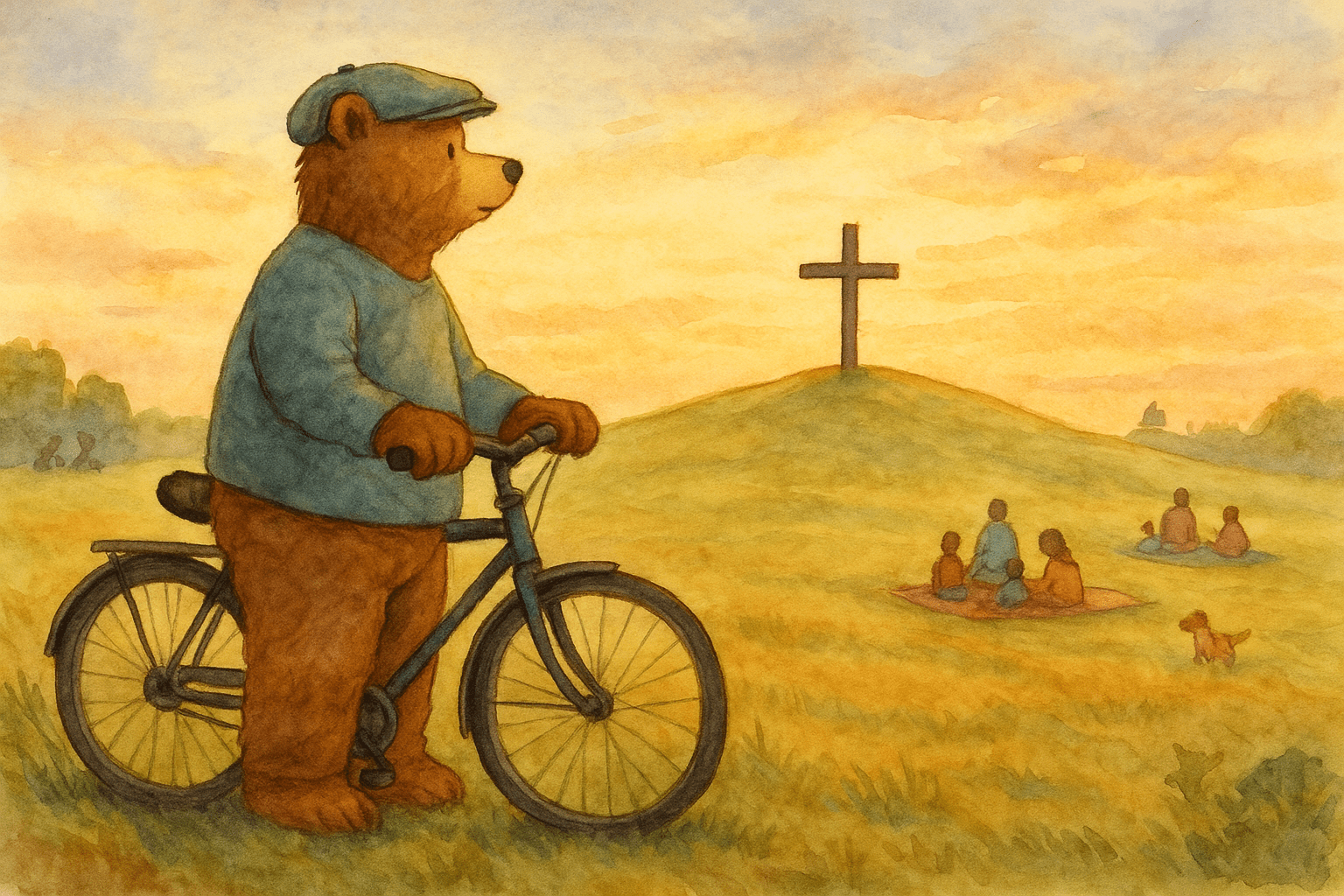
Es beginnt, wie so oft, in Rath. Der erste Weg führt ihn hinein in die große Stadt, hin zum Kölner Dom. Auf der Hohenzollernbrücke lässt es sich nicht mehr leugnen: Es ist Gamescom-Wochenende. Die Innenstadt rüstet sich: bald wird sie brummen, Musik dröhnen, Schlangen werden sich vor den Messehallen bilden. Schon jetzt zwingen Sperrungen zu Umleitungen. Köln im Festivalmodus – Faulmann denkt mit einem Schmunzeln, nicht ohne Ironie:
Auch an diesem Wochenende ist die “Jugend” der Welt in Köln. Nur dass sie diesmal nicht zu einem Hügel pilgert, sondern zu Konsolen, Cosplay und Controllern. Unterschiedliche Ziele – und doch eine Bewegung in Bewegung: die Sehnsucht, Teil von etwas Größerem zu sein.
Immerhin, so hat er gehört, soll das GC-Festival politischer werden, als man meinen könnte. Und wer weiß – vielleicht wird der Bär da später am Tag auch noch zu finden sein.
Einsweilen führt Faulmann Kurs jedoch hinaus Richtung Stadion. Schon hier legt sich Nostalgie über den Weg, denn er folgt dem Band der Lindenthaler Kanäle: Clarenbach- und Rautenstrauchkanal, in den 1920er-Jahren als Teil des städtebaulichen Grüngürtels angelegt. Alte Kastanien, barocke Achsen, Skulpturen von Kentaur und Najade. Heute plätschert leise das Wasser, Sonnenlicht flackert zwischen den Bäumen.
Diese Kanäle sind Oasen mitten in der Stadt, Orte der Erinnerung. Auch für Faulmann ganz persönlich – wie so viele Orte hier. Fast jeder trägt inzwischen ein Echo vergangener Wege, Begegnungen, Zeiten. Und vielleicht, denkt er, ist ebendies ein Zeichen – wenn sich diese Momente häufen,
wenn Orte immer mehr zu Erinnerungsorten werden, dann ist es Zeit, weiterzuziehen. Nicht, um das Alte zu vergessen, sondern um Raum für Neues zu schaffen.
Am Stadion zwingt ihn ein Halbmarathon erneut zum Umweg – wieder Menschenströme, wieder Pilger in ihrer ganz eigenen Form. Über die Dürener Straße rollt er nach Frechen. Nicht die schönste Passage, doch auch sie erzählt Geschichten: die alte Villa Vogt erinnert an die Steinzeugindustrie, die Frechen einst prägte. Industriegeschichte, still und beharrlich am Straßenrand.
Bei Porta lockt ein Trödelmarkt, und hunderte strömen dorthin. Auch das ist eine Form von Pilgerfahrt – ins Reich der Dinge.
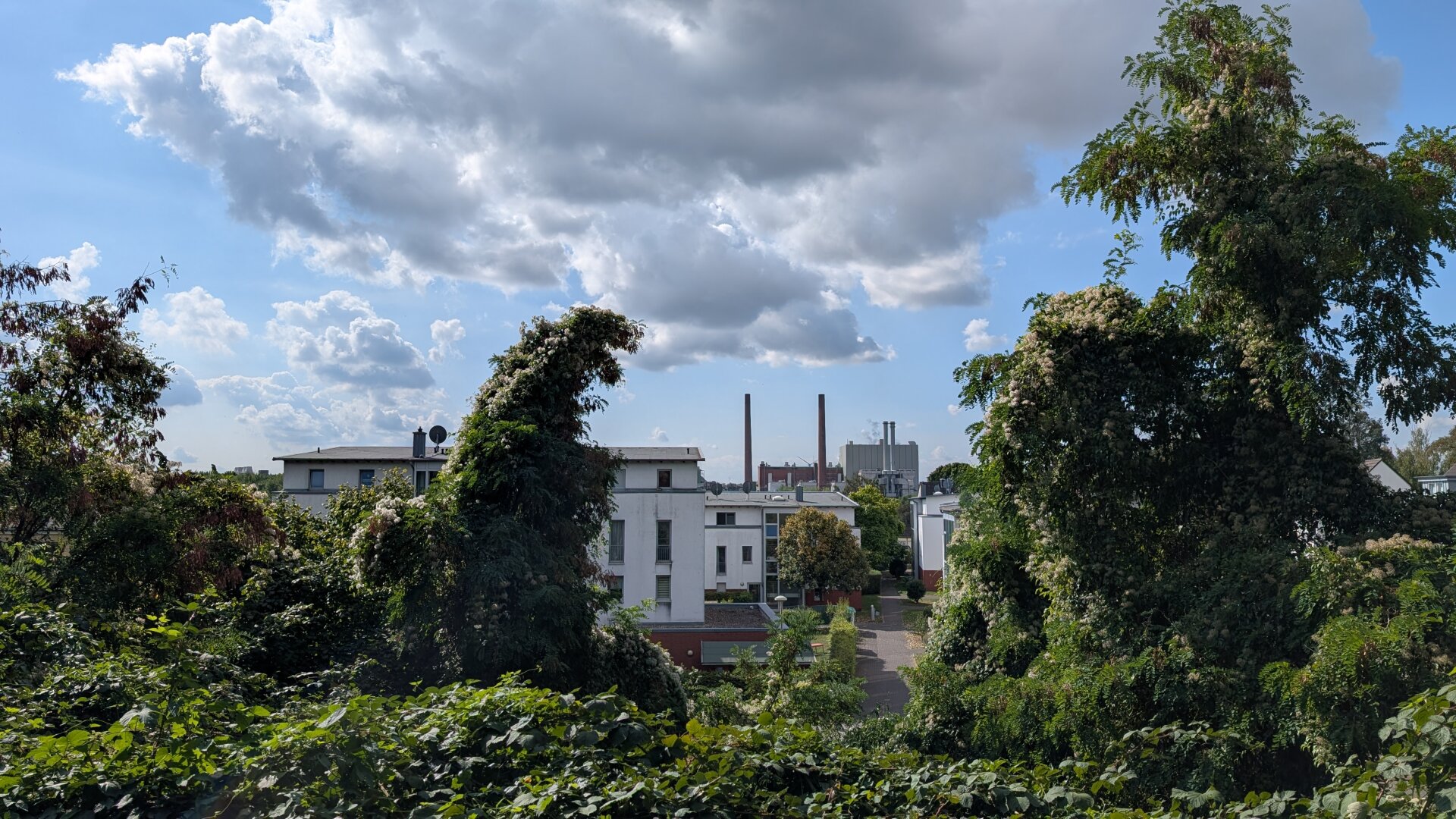
Allmählich wird es beschaulicher und ein Abstecher in den Rosmarpark bringt Stille. Auf dem „Dach von Frechen“ entdeckt Faulmann einen knorrigen, überwucherten Baum, dessen Silhouette fast an Godzilla erinnert.
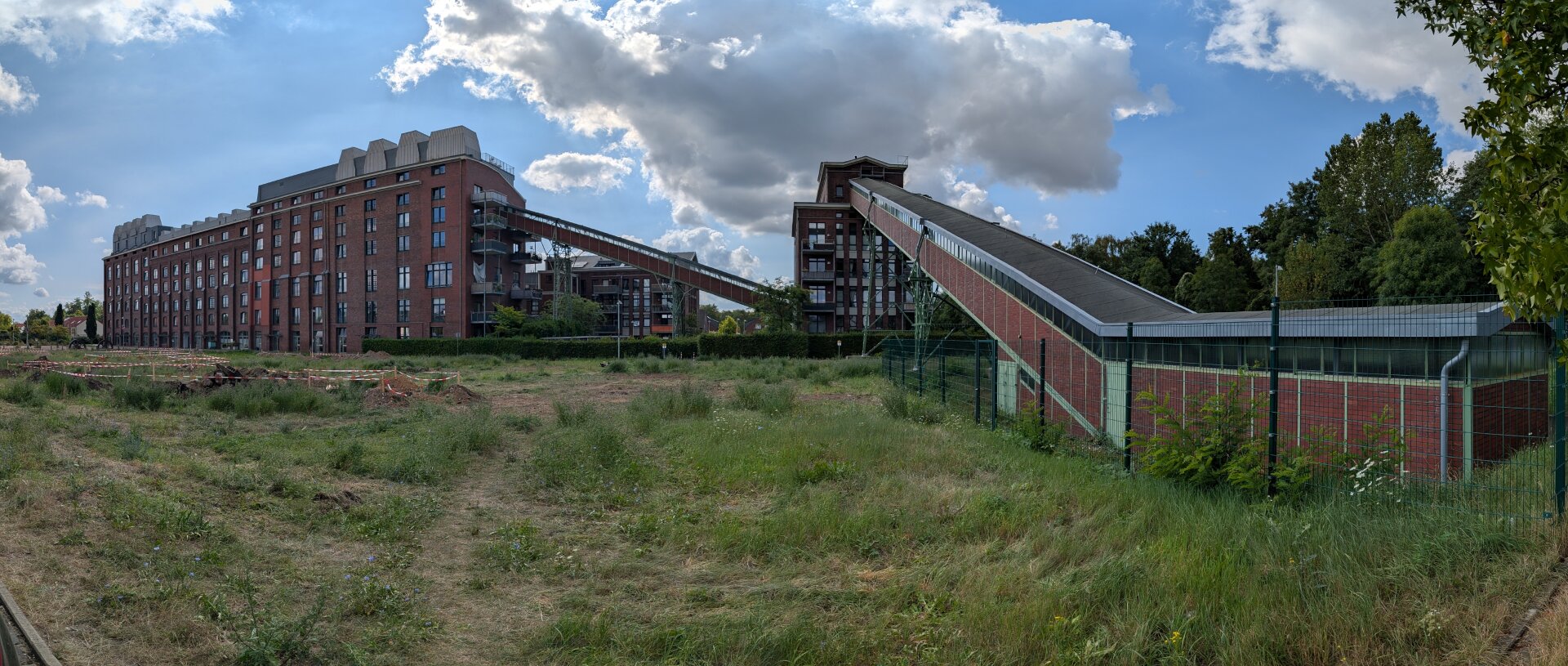
Dann erreicht er die Grube Carl: ein ganzer Industriekomplex, in dem ab 1869 Braunkohle gefördert, aufbereitet und schließlich zu Briketts verarbeitet wurde. Neben der Brikettfabrik standen hier Maschinenhäuser, Schächte und Gleisanschlüsse – ein eigener Kosmos der Arbeit, der das Rheinland prägte. Bis 1995 liefen die Pressen, Millionen Tonnen wurden produziert. Heute ist das alte Trocken- und Pressenhaus saniert und zu Wohnungen umgebaut. Backstein, Geschichte, neu belebt. Was früher von Maschinen erfüllt war, ist nun Lebensraum für Menschen – Geschichte in Mauern, die weiterlebt.
Auf dem nächsten Stück des Wegs huscht ein Fuchs vorbei. Erst flüchtet er, doch nach ein paar Metern bleibt er stehen und blickt aus der Deckung zurück – aufmerksam, ruhig, lauernd. Kein Pilger, kein Wächter, eher ein Wesen des Ortes, das Faulmann für einen Augenblick mustert. Im Blick des Fuchses liegt kein Fragen, nur ein Spiegeln. Für den Bären ist es ein stilles Bild: Erinnerung und Zukunft bestehen nicht nur aus Mauern und Menschen, sondern auch aus diesen flüchtigen Begegnungen.
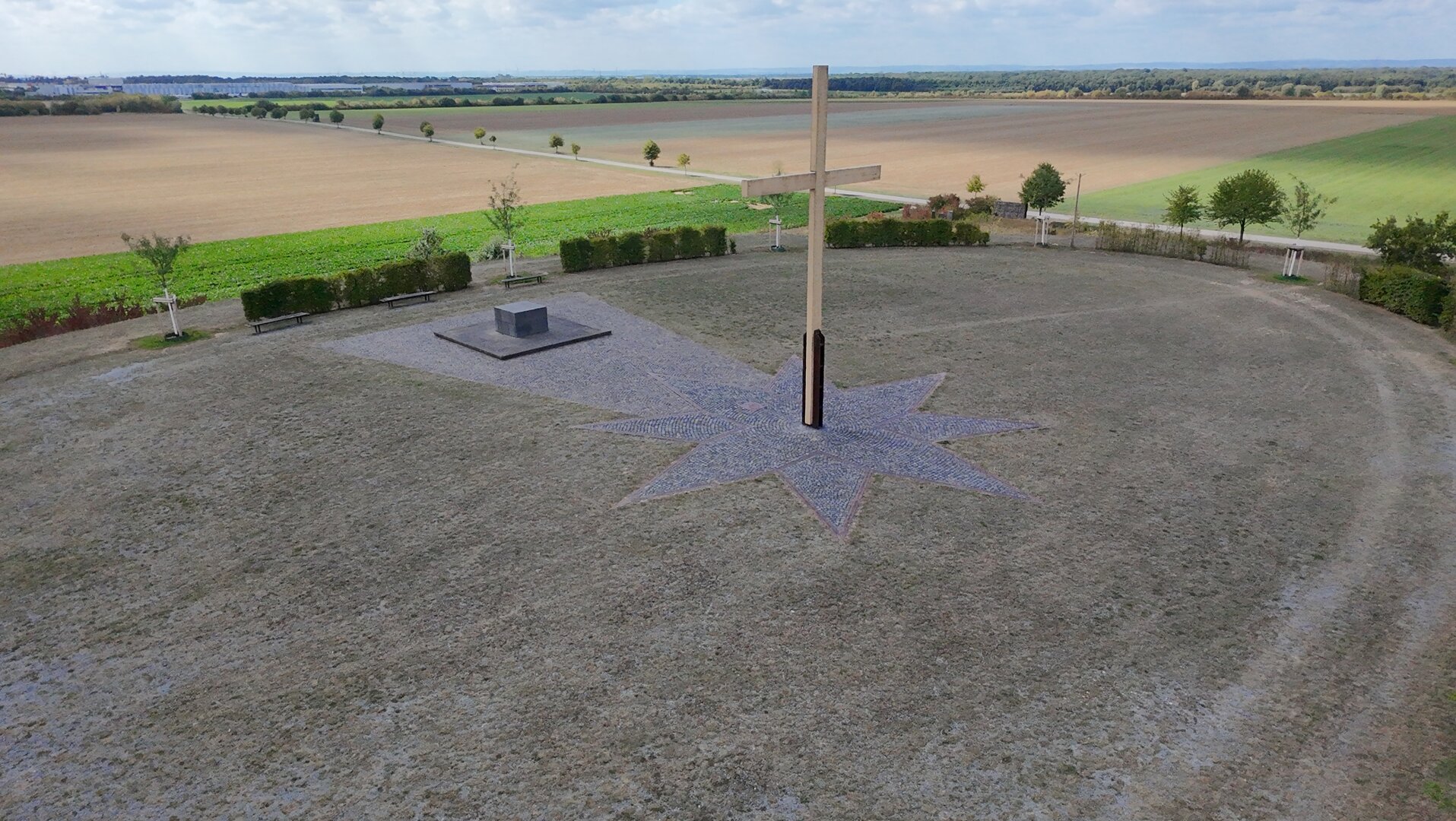
Und dann: Marienfeld. Der künstliche Papsthügel, „Berg der 70 Nationen“. Erde aus aller Welt wurde hier aufgeschüttet, zehn Meter hoch, 15 000 m² Fläche, ein Altar, der für 1,1 Millionen Menschen zum Zentrum wurde. Im August 2005 – Weltjugendtag.
Faulmann erinnert sich:
Am 20. August die Vigil, 800 000 Pilger, Kerzenmeer, die Weihe der schweren Weltjugendtagsglocke (6,7 t, benannt nach Johannes Paul II.). Am Morgen des 21. August dann die Abschlussmesse – das größte katholische Ereignis, das Deutschland je gesehen hat. Über 1,1 Millionen Pilger, Millionen TV-Zuschauer weltweit. Benedikt XVI. in seiner ersten Auslandsreise als Papst.
Und Faulmann hört die Worte nachhallen:
„A great joy cannot be kept to oneself. It has to be passed on.“
Dem kann sich Faulmann – zumindest kontextfrei – zustimmen. Große Freude lässt sich nicht festhalten, sie will geteilt werden. Muss sie vielleicht sogar. Man kann es als Auftrag verstehen.
Und er erinnert sich, wie er damals – im zweiten Semester – zum ersten Mal im Leben wirklich lernen musste. Eine neue Erfahrung, die ihn forderte, aber auch prägte. Der junge Faulmann ließ sich damals nur allzu gerne durch die Bilder und Berichte vom Weltjugendtag ablenken. Zwischen Büchern und Klausuren war das bunte Treiben auf dem Marienfeld wie ein Fenster in eine andere Welt.
Heute steht er selbst auf diesem Hügel. Was damals Ablenkung war, ist nun Einkehr. Der Kreis schließt sich – kurz denkt Faulmann an seinen Heimaturlaub: auch dort war ein Papstfeld. Ganz Freiburg jedoch schlichter, kleiner, beschaulicher – doch beide Orte verweben Geschichte und Erinnerung mit der Gegenwart.
Allmählich füllt sich der Hügel mit Ausflüglern. Familien breiten Picknickdecken aus, Kinder spielen, manche nutzen den Altar als Mittagstisch. Profaner, leiser – und doch bleibt der Ort aufgeladen.
Mehr denn je, denkt Faulmann, wäre es Zeit, auf Frieden zu hoffen.
In stiller Einkehr hofft er, so wie viele in Raum und Zeit auf Frieden für den Erdkreis – empirisch fürchtend, dass wie so oft das Gegenteil geschieht. Und doch: vielleicht liegt die Kraft des Bedenkens gerade darin, dem Akt schon vor dem Aussprechen Bedeutung zu geben.
Vielleicht braucht es aber mehr.
Vielleicht müsste man es hinausschreien.
Vielleicht …
Vielleicht sind diese „Papstfelder“ kleine Marker in seinem Lebensweg: 2005 das ferne Marienfeld, später Freiburg, das ihm da schon fern geworden war, nun wieder hier. Jedes Mal anders, jedes Mal neu gedeutet – und doch immer ein Innehalten, das bleibt.
Vom Hügel rollt er zum Erft-Radweg. Vertraut und schön, aber diesmal von elegischer Melancholie überzogen. An der Dobschieder Straße verlässt er die Erft, erklimmt den Anstieg zum Sonnenhof. Oben entfaltet sich vor ihm die Kölner Bucht – eine Landschaft der Weite: Felder, Horizonte, dahinter die Stadt. Ein Bild, das größer ist als der Augenblick.
Bei Fietzecks Weitsicht hält er diesmal an – zum ersten Mal. Jahrelang vorbeigeradelt, jetzt endlich Zeit.
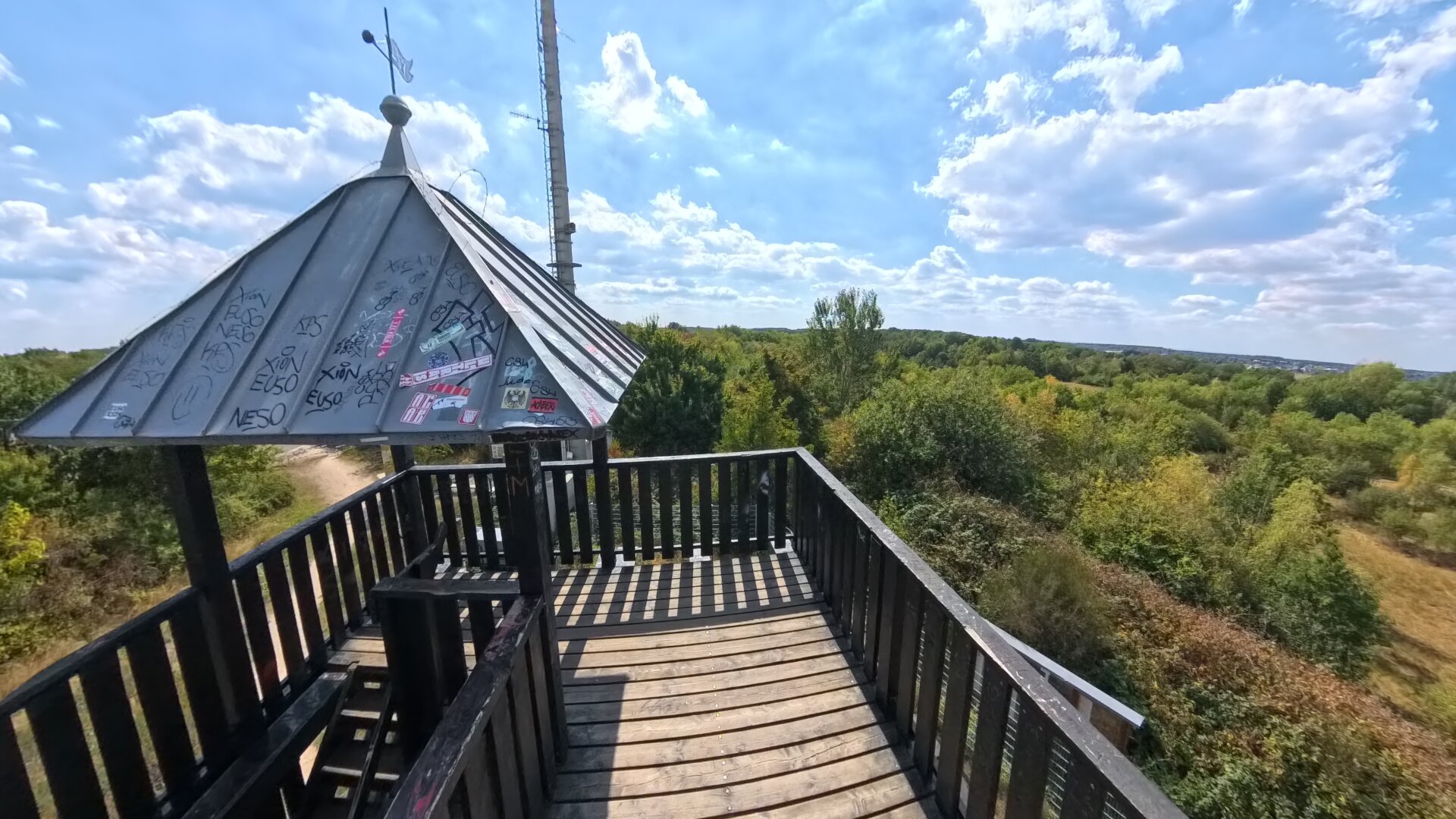
Der Blick zeigt, dass Weitsicht Geduld braucht.
Über Bornheim und Keldenich führt der Weg nach Wesseling. Die Fähre „RheinSchwan“ setzt ihn über, wie seit über hundert Jahren Schiffe an dieser Stelle Ufer verbinden. Auf dem Deck spürt er den Rhein: ruhig, verbindend, zeitlos.
Dann weiter über Lülsdorf und Langel nach Zons. Mauern, Tore, Gassen – seit 1372 unverrückbar. Eine Stadt, die Geschichte atmet, ein Ort, der bleibt.
Und schließlich die Leidenhausener Rennbahn. Heute ist hier der Lange Tag der Kölner Stadtnatur: Infostände, Begegnungen – und ein Stand mit Honig. Faulmann – mittlerweile ganz im Bären-Zen – plündert den Stand und greift zu: Lindenhonig und ein Met wandern ins Gepäck.
So endet der Tag, wo er begann: in Rath. Am späten Abend wird es Honigbrot geben, später vielleicht einen Schluck Met – aber vorher war da doch noch etwas …
Der Pilgerweg jedenfalls ist gefahren, die Erinnerung lebendig geworden. Und zwischen Nostalgie und Gegenwart bleibt eine Botschaft, die trägt:
Die Freude – und die Hoffnung – darf man nicht für sich behalten.
📌 Faktenkasten: Weltjugendtag 2005 in Köln
🗓 Daten & Motto
👥 Teilnehmer
⛰ Ort & Papsthügel
🔔 Besondere Ereignisse
⚙ Logistik
🌲🔥 Ausschluss ist am Lagerfeuer ausgeschlossen

Manchmal beschließen Ausschüsse Ausschlüsse, und am Ende bleibt niemand mehr übrig, der noch etwas zu beschließen hätte.
Doch im Wald, am Feuer, gilt eine andere Ordnung: Hier zählt Tee mehr als Protokoll, Glut mehr als Geschäftsordnung.
Und so sitzen Faulmann und Mummrich beisammen, um dem Ausschluss selbst die Tür zu weisen – mit einem Schmunzeln, einem Schluck und einem Trinkspruch.
Faulmann:
„Mummrich, der Ausschuss der Ausschüsse hat beschlossen, dass der Ausschuss Ausschuss ist.“
Mummrich:
„Dann ist also amtlich festgestellt, dass das Amtliche unamtlich und das Unamtliche amtlich geworden ist. Welch erhabene Klarheit!“
Faulmann:
„Heißt das nun, dass der Ausschuss sich selbst ausgeschlossen hat?“
Mummrich:
„Man könnte sagen: Er wurde in den Ruhestand versetzt. Ein Ausschuss im Ausstand, der ausschließlich dem Ausschluss der Unrichtigkeit der Beschlusslage der übergeordneten Instanz dient.“
Faulmann:
„Dann trinken wir darauf – auf den Ausschuss, der nun offiziell Ausschuss ist. Möge er in Frieden ruhen.“
Mummrich:
„Und möge er nicht wieder auferstehen wie der Phoenix aus der Asche. Denn davon hätten wir am Ende nur noch mehr Ausschuss.“
Faulmann & Mummrich (fast gleichzeitig):
„Auf den Ausschuss!“